Becoming Who We Are
“To say that a dream is useful may be tantamount to saying that breathing is useful. Try living without it.”
—Joyce Carol Oates
Rollo May Consortium
for the Humanities
“It’s not possible to codify Rollo May according to theory or method or circumscribed body of thought. There is, rather, the place of mindful inquiry, attendance to marginalized and, also, loftier aspects of consciousness and experience, and the fruits of these labors when done with especial integrity. ‘You should learn all the theories,’ he told me one evening, ‘but leave them at the door to your consulting room.’ Encounter lies beyond the foreground of theory and technique.”—Ed Mendelowitz in “Psyche and Soul,” a review of Robert Abzug’s Psyche and Soul in America: The Spiritual Odyssey of Rollo May
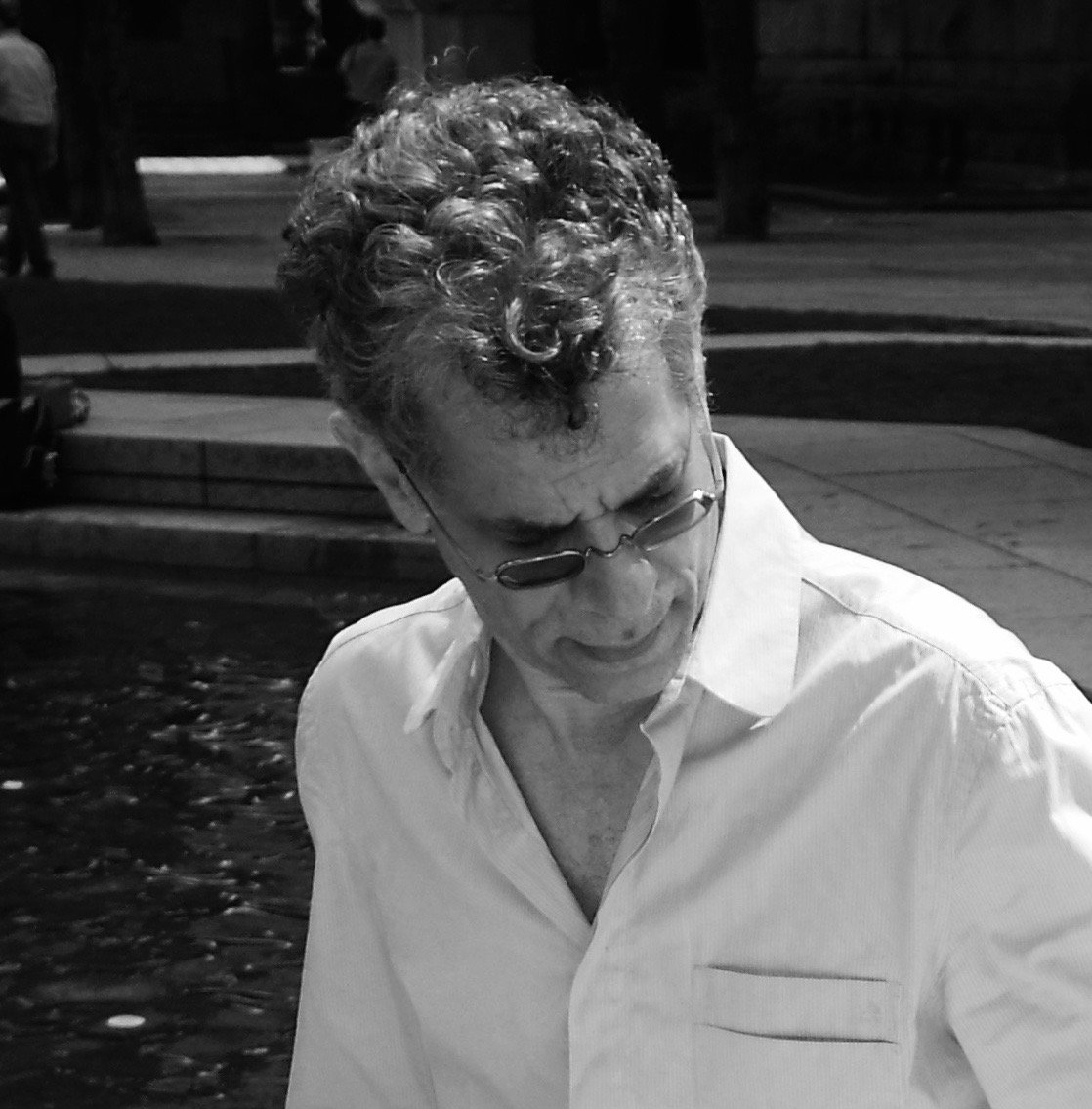
Ed Mendelowitz is an essayist, educator, and existence philosophical guide whose work explores vital connections between self, world, and the broader humanities. In both healing and creative endeavors, literature, art, and character commingle with matters of spirit and science of a piece with aspiring souls in disjointed times. “Artists were psychologists, you know, and profound ones,” observes Eugene O’Neill, “before psychology was invented.” “Science lights,” Melville cautions, '‘but cannot warm.” Both, this is to say, have a place within the human dilemma and challenge.

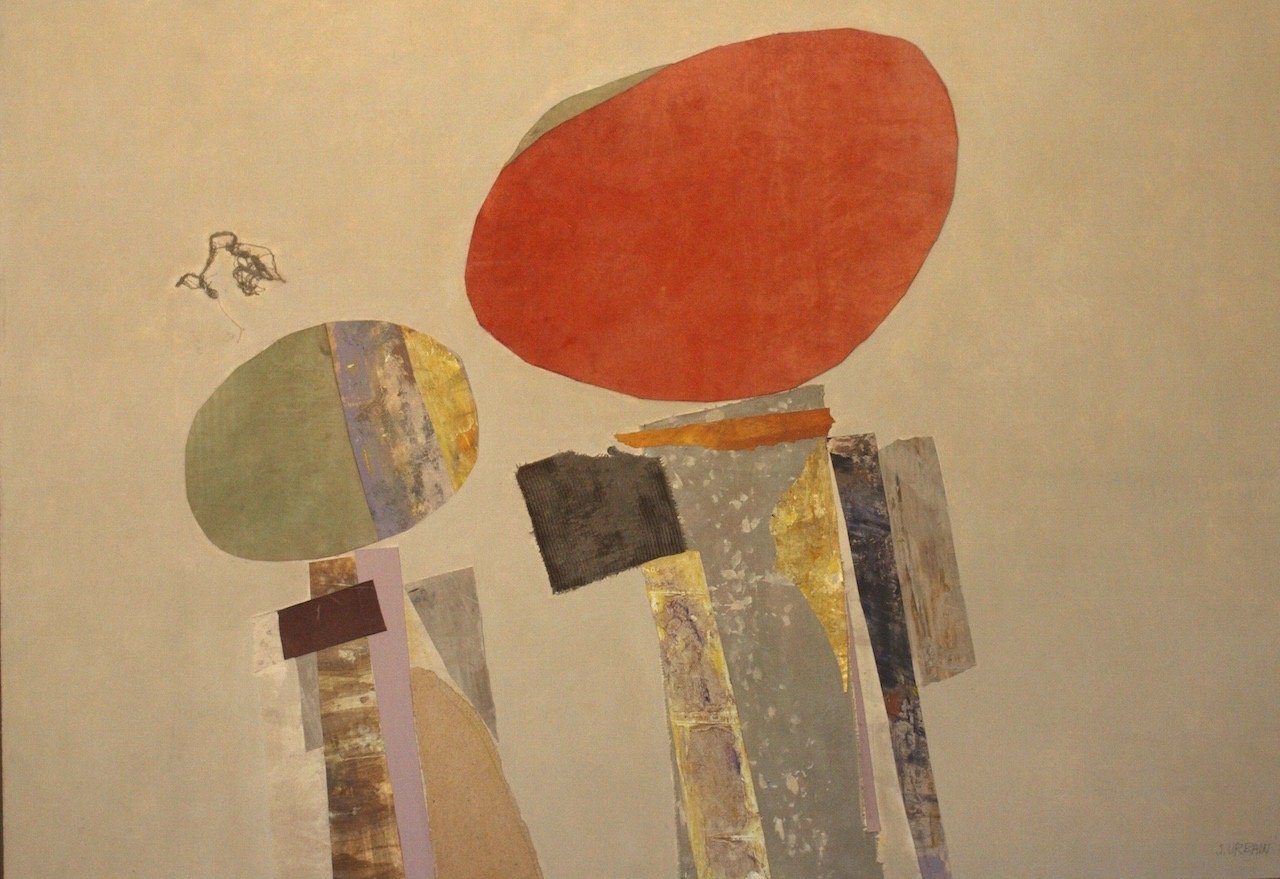
“Metamorphosis”
J. Urbain (1978)
Mendelowitz received his doctorate from the California School of Professional Psychology in Berkeley where he worked closely with the preeminent psychotherapist and author Rollo May. He serves on the Existenz Executive Council for the Karl Jaspers Society of North America and Honorary Advisory Board of The Humanistic Psychologist. He has contributed to some of the major compendiums of existential and humanistic praxis and thought. His writing explores the commingling of psychology and narrative with art, literature, music, cinema, religion, and, importantly, science. His collage-like Ethics and Lao-Tzu has been called "an extraordinary moral narrative” by Pulitzer Prize-winning psychoanalyst Robert Coles and "a compendium of wisdom from an astonishing variety of sources” by acclaimed analyst and author Allen Wheelis. He is recipient of the Rollo May Award for “independent and outstanding pursuit of new frontiers in humanistic psychology.”

“Black Square Sonnet”
J. Urbain (1978)
During his graduate years, Mendelowitz worked closely with Rollo May, one of the surpassing wisdom teachers of the 20th century. This association has had lasting significance, culminating visibly in his role as teaching assistant to May and, more privately, in friendships that lasted until the older man’s death in 1994 and his wife, Georgia’s, in 2021. His work reflects this influence in its abiding meditation on what is possible in the way of existence and its investigation of the manner in which one may be able to use adversity as an impetus for further growth. It is precisely this encounter that lies at the heart of the effective healing alliance, one inclining toward attentive comportment and (with time and cumulative acts of will) greater immersion in, and responsibility for, a world of life, relations, and commitments.

The writer
“I love your personal writing—and the freedom of mind and spirit that informs it!”
—Robert Coles, M.D., Harvard University
“Ethics and Lao-Tzu is masterwork of dazzling proportions.”
—Margaret and George Yonemura, Bank Street School and SUNY at Binghamton
“Ed Mendelowitz is a careful, thoughtful scholar, an articulate presenter of ideas, and one of the most ethical, honest people I know. He is an original, creative thinker who integrates insights from a number of disciplines including psychology, religion, philosophy, literature, mythology and the creative arts—challenging us and opening new vistas.”
—David Elkins, Ph.D., Pepperdine University
“He writes like a European, not an American, at least not a contemporary American psychologist!”
—Sasha Watkins, LMHC, Harvard University
“You have grasped the innermost kernel.”
—Eugene Taylor, Ph.D., Massachusetts General Hospital
“Dr. Mendelowitz is a wonderful guide because he really sees that I have my own wit and genius. When I am feeling a little insecure, it is his voice that holds out hope and quietly encourages me to believe in myself. Coming to see him is much different than anything I’ve ever known.”
—A young woman engaged in existence philosophical reflection
“Our first meeting stands out in my mind with intense clarity. He was a tall, slender man with a tranquil face and joyful disposition. His voice was soft and peaceful. He asked me into his office. The first thing he said wasn’t the typical, ‘So what can I do for you?’ All he said was, ‘Tell me about yourself.’”
—A young man engaged in existence philosophical reflection
“Ed Mendelowitz can’t be categorized as a clinician. I’ve known Ed well for some years as a person and in shared treatment of clients. You could say he works in the existential/humanistic tradition, which is true. But it’s not the whole story. That’s where he starts; where he goes is harder to explain. It has something to do with where you are and what you might be. For those needing or wanting to explore and better understand themselves, he is uniquely qualified.”
—Nassir Ghaemi, MD, MPH, Author and Professor of Psychiatry
“It is important to recognize Ed Mendelowitz’s absolutely noble heritage, which proclaims itself not only in his writings and rich clinical narratives but also in the phenomenon of his friendships with luminaries like Rollo May and Eugene Taylor. I treasure him as one of the vital souls in psychology.”
—E. Mark Stern, Ed.D., Professor Emeritus of Psychology, Iona College
The accompanist and guide

“One must harbor chaos to give rise to a dancing star.”
—Friedrich Nietzsche
“We mustn’t wish for the disappearance of our troubles but for the grace to transform them.”
—Simone Weil
“The ultimate paradox is that negation becomes affirmation.”
—Rollo May
The Rollo May Consortium is a forum for those who would remain willfully insomniac and wish not to resort to distractions or metaphorical soporifics in skating lightly through life along tributaries of predictable lexicons and outcomes. It would seem that much of the planet travels in a very different direction during an ominous moment in world time. For May, human being is the greater the more non-being it is able to take into itself. He was a fundamentally paradoxical being and thinker. “It’s life and life only,” opines Dylan in his song It’s Alright, Ma (I’m Only Bleeding) while still a very young man. It’s true, of course, and yet this allotted existence is all we have—something the poet, perhaps, intuits most of all. “We’re all human,” the analyst H. S. Sullivan liked to say; “some of us more so.” “I hope you and I will be among the more so,” May would succinctly urge in elaborating his mentor’s point. Toward this end, this Rollo May Consortium . . .

Collage art by John Urbain
Contact info:
edmendelowitz@proton.me